

The S.A.I.D. Principle for Tennis Players
TennisBPM | Coach Ran
In almost three decades of working with juniors, professionals, federations and national teams, one question comes up more than any other from tennis players ,coaches and their parents: I train regularly and eat well, so why is my game not improving, or why does my body keep breaking down?
Very often, the answer is not effort. It is a principle called S.A.I.D., Specific Adaptation to Imposed Demands. The body adapts to the demands you actually put on it, not the ones you meant to put on it. Tennis has its own very specific demands, so the training, the food and the recovery have to be specific too. This article explains the principle and shows the base to apply it to tennis, from U14 to the pro tour.
What S.A.I.D. means
S.A.I.D. says the body adapts specifically to the type, intensity and volume of the stress placed on it. A review of training specificity, covering aerobic, team and racket sports, strength and power work, and cross-training and concurrent training, concluded that the adaptations from high-performance training are relatively small and highly specific [1]. In plain words: you get what you train for, and the other qualities do not automatically follow.
The principle does not say “more is better.” It says the body gives you what you ask for. So the first job is to know what tennis actually asks.
What tennis asks of the body
What the evidence says. A tennis match often lasts more than an hour and sometimes more than five. It combines periods of maximal or near-maximal work with longer periods of moderate and low activity. The mean duration of work periods is 5 to 10 seconds and of rest periods 10 to 20 seconds, a work-to-rest ratio of about 1:1 to 1:4, and the rules allow 20 seconds between points, 90 seconds at changeovers and 120 seconds between sets [2]. Mean intensity over a match is generally below 60 to 70% of maximum oxygen uptake, so the average hides the bursts [2]. Kovacs notes that explosive serves and groundstrokes and rapid changes of direction require a high anaerobic capacity, and that high levels of aerobic conditioning help avoid fatigue and aid recovery between points [3]. In junior female players, the average rally lasted 8.2 seconds with 17.7 seconds of rest, 2.7 strokes and 2.3 changes of direction per rally, and heart rate and blood lactate rose with rally length, strokes and changes of direction [4].
The authors of the match-intensity review conclude that training should resemble match intensity and use interval training with appropriate work-to-rest ratios [2].
| Demand of tennis | What the research shows | What S.A.I.D. says to train (my coaching practice) |
|---|---|---|
| Repeated short bursts | Work periods average 5 to 10 s with 10 to 20 s of rest [2]; points last from about 3 s on fast surfaces to about 15 s [3] | Interval work built on 5 to 10 s efforts with 10 to 20 s of recovery, plus some longer rallies |
| Changes of direction | About 2.3 direction changes per rally in junior girls, with heart rate and lactate rising with them [4] | Multidirectional footwork, acceleration and deceleration drills |
| Long matches | Often over an hour, sometimes beyond five [2] | An aerobic base that supports recovery between points [3] |
| Serve and groundstroke power | High anaerobic demand [3]; serve speed responds to resistance and multimodal training [6] | Heavy and fast strength work, jumps and rotational throws |
| Repeated racket-arm load | The playing arm adapts [5]; stress fractures were found in elite players [15] | Gradual progression of hitting and serve volume, strength work and rest |
Specificity in action: two tennis examples
1. The racket arm. In female tennis and squash players, the playing arm had more bone mineral content than the non-playing arm, and the difference was larger in players who started playing earlier relative to the age of menarche [5]. The bone adapted where the racket loaded it, and the timing of the load relative to biological age mattered.
2. Serve speed. A meta-analysis of 16 randomized trials found significant improvements in serve speed from resistance and multimodal training, while core training on its own did not reach significance [6]. In a randomized trial of 30 nationally ranked 13-year-old boys, a six-week programme of core strength, elastic resistance and medicine ball work, three sessions a week, improved serve velocity significantly, while the control group did not change and serve accuracy was not affected [7]. In my article, the serve responds when the stimulus matches what the serve demands. See my article on core training and the serve.
Training, food and sleep are inputs, not adaptations
I want to correct something I see in many articles. Exercise, nutrition and sleep are not the body’s adaptations. They are the three inputs that decide which adaptation you get:
- Training is the stimulus: tennis, S&C and mobility.
- Food supplies the energy and the raw fuel.
- Sleep and rest give the body time to adapt.
What the evidence says. The joint consensus statement of the European College of Sport Science and the American College of Sports Medicine (ACSM) on overtraining says successful training must involve overload, but must avoid the combination of excessive overload and inadequate recovery [8]. A review of why people respond differently to the same programme lists genetics, the programme itself, recovery between sessions (including sleep and psychological stress) and nutrition among the factors [9].
Can a tennis player train too much? Too little?
Yes, to both.
Too much. Planned, short-term overload followed by recovery is called functional overreaching, and performance improves after recovery. When the balance is not respected, non-functional overreaching can occur, and the line between that and overtraining syndrome is hard to draw [8]. Overtraining syndrome is diagnosed by exclusion, and the factors that must be ruled out include dietary caloric restriction, insufficient carbohydrate or protein intake, and iron deficiency [8].
In tennis, the warning signs are visible in the research:
- In players aged 12 to 18, loads tended to be higher in focused training periods than in competition, because weekly training volume was higher. About one in eight elite junior players has a health problem in any given week [13].
- A review of tennis injuries found that most occur in the lower extremities, followed by the upper extremities and then the trunk, and that there are very few prospective studies of risk factors and no randomized trials of prevention [14].
- A study of elite players found an absolute risk of stress fractures of 12.9% over two years, with junior players at the highest risk [15].
- For young athletes in general, the American Academy of Pediatrics describes overtraining as lower performance with a higher risk of injury and illness [16].
What to do: Plan blocks, not just weeks. The ITF periodization review describes training blocks between clusters of tournaments of about 20 weeks, or almost 40% of tennis time, including at least one 6-week block for more intensive S&C in transitioning players. It also notes the WTA recommendation to minimize stretches of more than 3 consecutive competition weeks [17]. My article on the calendar problem for juniors covers how to build rest blocks.
Too little. Rest is not the same as stopping. A study of eight top collegiate tennis players found that a 5-week, structured but unsupervised break led to significant drops in sprint power and aerobic capacity, which the authors put down to poor compliance with the prescribed training [18]. Plan the break and the return.
For recreational adult players, ACSM recommends at least 150 minutes a week of moderate-intensity cardiorespiratory exercise (or 75 minutes of vigorous exercise, or a mix), resistance exercise for each major muscle group on 2 to 3 days a week, and neuromotor exercise such as balance, agility and coordination [20]. In my coaching practice, playing tennis counts toward the cardio target, but it does not replace the strength work.
Sleep: the missing link for tennis players
What the evidence says. A joint consensus statement of the American Academy of Sleep Medicine and the Sleep Research Society recommends that adults sleep 7 or more hours per night on a regular basis. It links sleeping less than 7 hours to weight gain and obesity, diabetes, high blood pressure, heart disease, stroke and depression, as well as impaired immune function, increased pain and impaired performance [12]. For teenage players, a recent review on monitoring tennis players refers to 8 to 10 hours a night [13].
What I see: Late finishes, early flights and time-zone changes that break a player’s sleep pattern.
What to do: Treat bedtime like a session on the calendar, and plan sleep around travel and match times. See my articles on sleep for tennis players and travelling tennis players.
Nutrition: fuel for the demands of tennis
What the evidence says. The ITF, WTA and ATP expert group statement on nutrition in high-performance tennis covers training nutrition, body composition, low energy availability and Relative Energy Deficiency in Sport (REDs), match-day nutrition, supplements, travel and environment, illness and injury rehabilitation, and special groups including youth, female and wheelchair players. It advocates a “food first” approach and encourages academies and federations to involve qualified nutrition professionals [10].
When energy intake is too low for the training load, the cost is health, not only performance. The IOC consensus statement on REDs lists hormonal disturbances, loss of periods, weakened bones and susceptibility to stress fractures among the effects [11]. For a tennis player with a heavy schedule and a lot of travel, that is a real risk.
What to do:
- Treat match-day fuelling as if the match could be long and intermittent, because it can last over an hour and sometimes beyond five [2]. This is my coaching practice.
- Do not cut calories while increasing the training load, especially in growing players and in female players [10, 11].
- Plan food for travel and for late finishes. See my article on travelling tennis players.
- Work with a qualified sports dietitian where possible [10].
Specificity IS BOTH ways
Specificity is neither good nor bad. You get what you train for, and the other qualities may not follow.
What the evidence says. A meta-analysis of 21 studies on concurrent training found that for strength, strength training alone had a mean effect size of 1.76, endurance training alone 0.78 and concurrent training 1.44. For power, the figures were 0.91, 0.11 and 0.55 [19]. The interference from endurance work depended on its type, frequency and duration, and running interfered more than cycling [19].
What this means for tennis (my coaching experience): Tennis players need strength and power and a solid aerobic base [3]. That does not mean long daily runs. Interval-based conditioning that matches the 5 to 10 second work periods of the game [2] is more specific, and it keeps endurance volume under control so strength and power gains are not blunted. In the same way, adding core work and expecting the serve to improve is a different stimulus from what the serve demands [6].
One more clarification. Overuse injuries and stress fractures are not “negatives of S.A.I.D.” They are what can happen when the load outruns recovery or fuel [8, 11, 15].
Every player adapts differently
What the evidence says. People given the same standardised programme show a wide range of responses, and genetics, the programme, lifestyle, recovery and nutrition all play a part [9]. For young players, the bone study adds another layer: the adaptation depended on when the load started relative to the age of menarche [5].
What to do: Do not copy a pro’s schedule. Track your own numbers with the same tests under the same conditions: serve speed, jump height, sprint time, shoulder rotation range, sleep and soreness. Change the plan based on what your body shows over weeks, not days. For juniors, consider chronological age, biological age and training age together. My article on LTAD for tennis players covers this.
Six best TIPS for using S.A.I.D. in tennis
- Set realistic, individual goals. ACSM says a programme should be modified according to habitual activity, physical function, health status, exercise responses and stated goals [20]. A junior, a club player and a tour player need different plans.
- Match the stimulus to the game. Short explosive efforts, multidirectional movement, rotational power and serve-specific strength [2, 3, 6].
- Progress gradually. ACSM notes that gradual progression of intensity and volume may reduce the risks of exercise [20]. Raise serve and hitting volume slowly, especially after a break or during a growth spurt. Overload is planned, not maxed out every session.
- Eat for the demands. Food first, matched to training and match days [10].
- Protect recovery. Reset weeks, rest blocks and sleep [8, 12, 17].
- Be patient and measure. Nothing happens overnight. Build the base before asking for more speed and power. This one is my coaching practice.
Four things to avoid in tennis training
- Over- or under-training. Find your own balance. A club player should not copy a pro’s multiple daily sessions, and a competitive junior should not rely on match play alone to build fitness [8, 20]. This one is partly my coaching practice.
- Eating without the big picture. Under-fuelling training and matches puts performance and health at risk [10, 11].
- Random, unplanned training. ACSM supports individualised, progressive programmes [20]. In my coaching practice, a plan with exercises, sets, reps and progression is the only way to know whether the training is working.
- Believing the hype. Social media and celebrity endorsements make pro results look quick and easy. Those players have years of progressive training and a team behind them, and people respond differently to the same programme [9].
S.A.I.D. across the ages
This is my coaching practice, built on the evidence above. Always consider chronological, biological and training age together.
| Player | Main focus | Watch-outs |
|---|---|---|
| U14 | Movement skill: running, jumping, throwing, rotation and multi-sport play, with light medicine ball work, resistance training . | Do not chase serve speed. Keep tournament clusters short |
| U16 | Supervised strength ,speed with load adjusted to growth | Growth spurts and rising serve volume |
| U18 | Strength and power built in develop blocks, with two short strength sessions in tournament clusters | Travel, sleep, calendar and fuelling [10, 13] |
| Pro tour | Keep strength and power going all year and manage load across the calendar | Accumulated overload, stress fractures and long seasons [14, 15, 17] |
| Recreational adult | Meet the ACSM minimums for cardio, strength on 2 to 3 days and neuromotor work [20] | Sudden jumps in playing volume |
My articles on LTAD for tennis players and training load for tennis players explain few concepts and training in depthj.
S.A.I.D. across the week
For coaches and players you can use this as sample . Adjust it for age, injury history and calendar.
| Week type | Tennis | Strength and speed | Recovery and food |
|---|---|---|---|
| Develop week | Technical and tactical sessions, plus interval-style on-court conditioning [2] | 2 to 3 sessions, with heavier strength work and fast movements | Fuel the training, protect sleep [10, 12] |
| Competition week | Matches and short practices | 2 short sessions with low volume, keeping the intensity | Match-day fuelling, protect sleep and travel recovery [10] |
| Reset week | Light hitting only | Mobility and light activation | Rest, check-ins, gradual return. See my post-tournament recovery article |
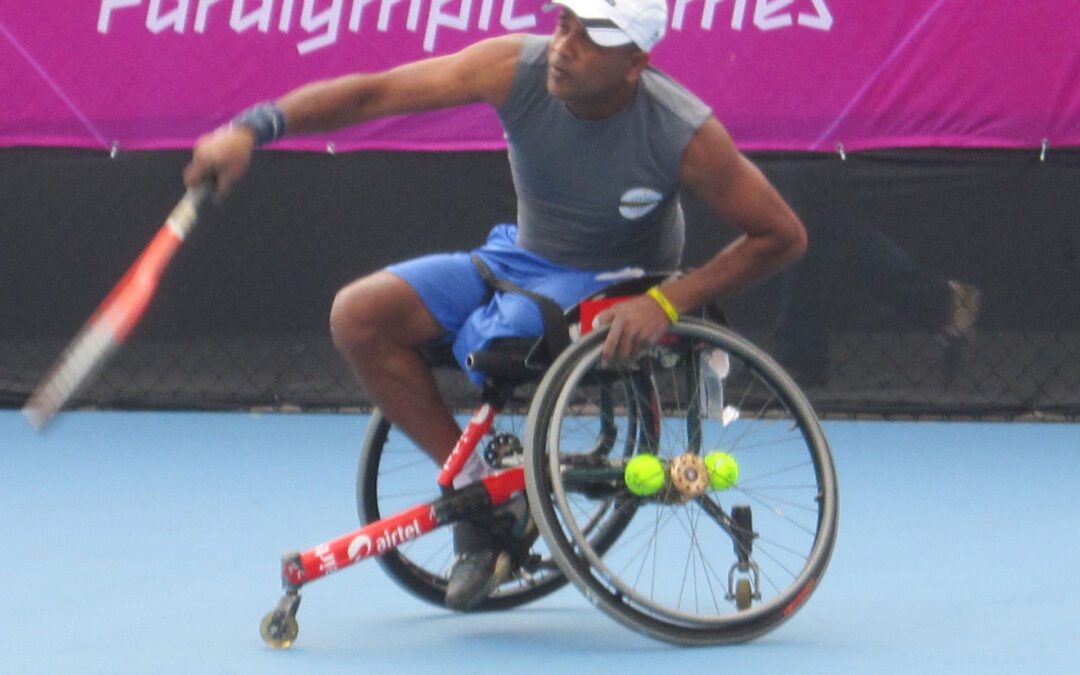
S.A.I.D. in wheelchair tennis
Wheelchair tennis follows the same principle, with different demands. It has been a Paralympic sport since Barcelona 1992, and the main rule difference is that the ball may bounce twice before it is returned [21]. Because the body, the equipment and the movement are different, S.A.I.D. asks for a different plan.
What the evidence says.
- Match demands. An ITF review reports singles matches of about 50 to 80 minutes, with real playing time of only 15 to 20% of the total. Work-to-rest ratios were 1:1 to 1:4, points lasted about 4 to 10 seconds, and the rules allow 20 seconds between points and 90 seconds at changeovers. Heart rate averaged 120 to 140 beats per minute (65 to 75% of maximum), and the review describes the sport as moderate to high intensity. The values varied with the type of impairment, the surface and the level of play [21].
- A faster game. The same review notes a trend toward faster play, with more players returning the ball after the first bounce at the Beijing 2008 Paralympics than at Athens 2004 [21]. It also suggests periodised training with a high-volume, low-intensity phase, a phase that raises intensity at a 1:1 work-to-rest ratio, and a competition-like phase of 6 to 8 seconds of high intensity with 20 seconds of rest. These are suggestions, not tested programmes [21].
- Serve power. In a study of nine of the ten top Spanish male wheelchair players, a medicine ball throw that copied the serve was the main predictor of serve speed (r² = 0.847), and the authors recommend medicine ball throws in training. The serve is played seated, so the leg drive and jump used by standing players are not available [22].
- The shoulder. Shoulder complaints in wheelchair athletes have been reported in 16% to 76% of athletes, and the quality of the studies was low [24]. A scoping review of wheelchair tennis lists acromioclavicular problems, osteoarthritic changes, joint effusion and rotator cuff tears among the findings. The risk factors it names include overhead movements, repetitive activation of the anterior muscle chain and internal rotators, and unbalanced load. It also notes that for wheelchair users the shoulder becomes the main source of mobility, not only a joint for reaching [23]. A balanced strength training programme may reduce the risk, but the evidence is limited [24].
- Nutrition. The ITF, WTA and ATP expert statement says wheelchair players have distinct physical and energy demands based on their impairment, and need tailored nutrition and hydration strategies [10].
| Demand of wheelchair tennis | What the research shows | What S.A.I.D. says to train (my coaching practice) |
|---|---|---|
| Short, repeated efforts | Points of about 4 to 10 s, 20 s between points, work-to-rest 1:1 to 1:4 [21] | Chair sprints, turns and stops in 6 to 8 s efforts with about 20 s of recovery |
| Propulsion plus hitting | The same arms push the chair and hit the ball, and shoulder complaints are common [23, 24] | Balanced upper-body strength (pulling as well as pushing), scapular and rotator cuff work, and careful progression of volume |
| Seated serve | A serve-pattern medicine ball throw predicted serve speed [22] | Medicine ball throws and trunk rotation power from the chair |
| Moderate average intensity | Heart rate 120 to 140 bpm [21] | Aerobic conditioning that supports recovery between points |
| A faster game | More first-bounce returns at Beijing 2008 than at Athens 2004 [21] | Chair speed, anticipation and taking the ball early |
| Individual impairment | Match values varied with injury type [21]; nutrition needs are impairment-specific [10] | A plan built for the individual, with medical and physiotherapy input |
What to do (my coaching practice):
- Start with the individual. Impairment, trunk control, seating position and chair set-up all shape what is possible and what is safe.
- Balance push and pull. Do not only strengthen the muscles that push and hit. Add the pulling and stabilising muscles of the back and shoulder blade [24].
- Progress volume slowly. Raise hitting, serving and propulsion volume gradually, and treat any new shoulder pain as a reason to see a physiotherapist early.
- Plan recovery around daily life. A wheelchair user’s shoulders work all day, so rest blocks must account for the load of everyday movement [23].
- Fuel and hydrate individually. Work with a qualified sports dietitian who understands the player’s impairment [10].
- Work as a team. Coach, S&C coach, physiotherapist and doctor should share one plan.
The limits
Specificity is a well-established principle, but the evidence behind each tennis example is limited. The bone study measured female players at one point in time and shows an association, not proof of cause [5]. The serve-speed trial had 30 boys [7], and the meta-analysis pools programmes that differ widely [6]. The match-demand data come from different players, levels, surfaces and ball types, so the numbers vary [2, 3, 4]. The tennis injury review noted very few prospective studies of risk factors and no randomized trials of prevention [14]. The concurrent training results come from pooled studies with different programmes [19]. The ACSM statement is written for apparently healthy adults [20]. Always individualise, and see a doctor, physiotherapist or registered dietitian if you have a health condition, an injury or signs of under-fuelling.
The wheelchair tennis evidence is thinner still. The serve study had nine male players from one country [22]. The shoulder reviews found a very wide prevalence range (16% to 76%), and the quality of the underlying studies was low [24]. The match-demand values varied with impairment type, surface and level of play, and the periodisation suggestions in the ITF review have not been tested in trials [21]. I did not find detailed evidence for women or for specific impairment groups, so every wheelchair tennis plan needs individual assessment.
As a S&C CoacH persective training both Tennis & WHEELCHAiR TENNIS
S.A.I.D IN S&C is far deeper out of the many principle this article is the rational behind mandatory principle.
Remember ,your body adapts to what you ask of it, if you give it the fuel and the time. In tennis, that means training for short explosive efforts repeated for hours, building the strength and power the serve and the legs need, fueling like the long, intermittent event it is, and protecting your sleep and rest blocks. That is how a player starts building a game that lasts.
This article is for general education and is not medical advice. Anyone with pain, injury or health concerns should consult a qualified doctor, physiotherapist or registered dietitian.
Go deeper with TennisBPM
- Coach education: TennisBPM Level 1 (The Performance Foundation) and Level 2 (The Tour-Ready Coach) workshops. See the Coach Education page for current dates.
- Books: Tennis Fitness and Tennis Wellness & Performance. More on the TennisBPM books page.
References
- Reilly T, Morris T, Whyte G. The specificity of training prescription and physiological assessment: a review. J Sports Sci. 2009;27(6):575-589. doi:10.1080/02640410902729741
- Fernandez J, Mendez-Villanueva A, Pluim BM. Intensity of tennis match play. Br J Sports Med. 2006;40(5):387-391.
- Kovacs MS. Applied physiology of tennis performance. Br J Sports Med. 2006;40(5):381-386.
- Fernandez J, Mendez-Villanueva A, Fernandez-Garcia B, Terrados N. Match activity and physiological load in junior female tennis players. Br J Sports Med. 2007;41(11):711-716.
- Kannus P, Haapasalo H, Sankelo M, et al. Effect of starting age of physical activity on bone mass in the dominant arm of tennis and squash players. Ann Intern Med. 1995;123(1):27-31.
- Deng N, Soh KG, Xu F, Yang X. The effects of strength and conditioning interventions on serve speed in tennis players: a systematic review and meta-analysis. Front Physiol. 2025;15:1469965. doi:10.3389/fphys.2024.1469965
- Fernandez-Fernandez J, et al. Effects of a 6-week junior tennis conditioning program on service velocity. J Sports Sci Med. 2013;12(2):232-239.
- Meeusen R, Duclos M, Foster C, et al. Prevention, diagnosis, and treatment of the overtraining syndrome: joint consensus statement of the European College of Sport Science and the American College of Sports Medicine. Med Sci Sports Exerc. 2013;45(1):186-205. doi:10.1249/MSS.0b013e318279a10a
- Mann TN, Lamberts RP, Lambert MI. High responders and low responders: factors associated with individual variation in response to standardized training. Sports Med. 2014;44(8):1113-1124. doi:10.1007/s40279-014-0197-3
- Vicente-Salar N, Crespo C, Pluim BM, et al. International Tennis Federation (ITF), Women’s Tennis Association (WTA), and Association of Tennis Professionals (ATP) expert group statement on nutrition in high-performance tennis: current evidence to inform practical recommendations and guide future research. Int J Sport Nutr Exerc Metab. 2025;35(6):557-594. doi:10.1123/ijsnem.2025-0001
- Mountjoy M, Ackerman KE, Bailey DM, et al. 2023 International Olympic Committee’s (IOC) consensus statement on Relative Energy Deficiency in Sport (REDs). Br J Sports Med. 2023;57(17):1073-1097. doi:10.1136/bjsports-2023-106994
- Watson NF, Badr MS, Belenky G, et al. Recommended amount of sleep for a healthy adult: a joint consensus statement of the American Academy of Sleep Medicine and Sleep Research Society. J Clin Sleep Med. 2015;11(6):591-592. doi:10.5664/jcsm.4758
- Michel M-F, Girard O, Guillard V, Brechbuhl C. Well-being as a performance pillar: a holistic approach for monitoring tennis players. Front Sports Act Living. 2023;5:1259821. doi:10.3389/fspor.2023.1259821
- Pluim BM, Staal JB, Windler GE, Jayanthi N. Tennis injuries: occurrence, aetiology, and prevention. Br J Sports Med. 2006;40(5):415-423. doi:10.1136/bjsm.2005.023184
- Maquirriain J, Ghisi JP. The incidence and distribution of stress fractures in elite tennis players. Br J Sports Med. 2006;40(5):454-459. doi:10.1136/bjsm.2005.023465
- Brenner JS, Watson A; Council on Sports Medicine and Fitness. Overuse injuries, overtraining, and burnout in young athletes. Pediatrics. 2024;153(2):e2023065129. doi:10.1542/peds.2023-065129
- Reid M, Quinlan G, Morris C. Periodisation in tennis. ITF Coaching & Sport Science Review. 2010;18(50):38-40. doi:10.52383/itfcoaching.v18i50.629
- Kovacs MS, Pritchett R, Wickwire PJ, Green JM, Bishop P. Physical performance changes after unsupervised training during the autumn/spring semester break in competitive tennis players. Br J Sports Med. 2007;41(11):705-710. doi:10.1136/bjsm.2007.035436
- Wilson JM, Marin PJ, Rhea MR, Wilson SMC, Loenneke JP, Anderson JC. Concurrent training: a meta-analysis examining interference of aerobic and resistance exercises. J Strength Cond Res. 2012;26(8):2293-2307. doi:10.1519/JSC.0b013e31823a3e2d
- Garber CE, Blissmer B, Deschenes MR, et al. American College of Sports Medicine position stand. Quantity and quality of exercise for developing and maintaining cardiorespiratory, musculoskeletal, and neuromotor fitness in apparently healthy adults: guidance for prescribing exercise. Med Sci Sports Exerc. 2011;43(7):1334-1359. doi:10.1249/MSS.0b013e318213fefb
- Sánchez-Pay A, Torres Luque G, Sanz Rivas D. Analysis of competitive wheelchair tennis. ITF Coaching & Sport Science Review. 2014;22(63):22-25. doi:10.52383/itfcoaching.v22i63.502
- Sánchez-Pay A, Martínez-Gallego R, Crespo M, Sanz-Rivas D. Key physical factors in the serve velocity of male professional wheelchair tennis players. Int J Environ Res Public Health. 2021;18(4):1944. doi:10.3390/ijerph18041944
- Mayrhuber L, Rietveld T, de Vries W, van der Woude LHV, de Groot S, Vegter RJK. A scoping review on shoulder injuries of wheelchair tennis players: potential risk-factors and musculoskeletal adaptations. Front Rehabil Sci. 2022;3:862233. doi:10.3389/fresc.2022.862233
- Heyward OW, Vegter RJK, de Groot S, van der Woude LHV. Shoulder complaints in wheelchair athletes: a systematic review. PLoS ONE. 2017;12(11):e0188410.