

TennisBPM | Coach Ran
In almost three decades of working with juniors, professionals, federations and national teams, one rule keeps showing up on courts and in gyms around the world: no pain, no gain. Coaches say it, parents repeat it, and young athletes believe it. For juniors, it is the wrong rule.
Hard work is not the problem. Hard work without recovery is. A growing athlete who trains, competes and travels with no gaps will sooner or later pay for it, with an injury, an illness or simply the loss of love for the sport. This article is for parents and coaches who want to get the best from young athletes without breaking them. Sadly I have seen many players who are smart , talented who work hard quit die to the pressure and their love for the sport was gone .
Key takeaways for parents and coaches
- Hard is fine. Unrecovered is not. Overuse injuries come from repetitive stress without enough recovery [1].
- One sport all year raises the risk. Specialized training was an independent risk factor for injury and for serious overuse injury [2].
- Watch the hours. More hours of sport a week than the child’s age in years, or more than twice as much organised sport as free play, were linked with serious overuse injury [2].
- Strength training is safe and useful for kids when qualified professionals design and supervise it [3].
- Sleep and days off are part of training [1, 5].
- Know the warning signs, from burnout to concussion danger signs [1, 7, 8].
Why no pain, no gain fails young athletes
What I see: Young players who train through everything, hide soreness, and arrive at tournaments already tired physically and mentally drained.
What the evidence says. The American Academy of Pediatrics (AAP) clinical report explains that overuse injuries come from repetitive stress without enough recovery, which leads to accumulated musculoskeletal damage. When training load stays above recovery for long periods, overtraining syndrome can follow, with lower performance, a higher risk of injury and illness, and effects on the endocrine, neurologic, cardiovascular and psychological systems. Burnout, meaning physical or mental exhaustion with a reduced sense of accomplishment that leads a young athlete to devalue the sport, is one of the main reasons young people leave sport [1]. The report also points to high training volumes and the pressure to specialise, and cites that about 70% of young athletes stop organised sport by age 13 [1].
Pain deserves respect. A tired muscle after a hard session is normal. Pain that persists or gets worse over several days is not, and Dr Joel Brenner, a co-author of the AAP report, lists it among the red flags [8].
What “train smarter” means in practice
Smarter does not mean easier. It means the work is planned, built up gradually, and balanced with recovery:
- Plan rest first. The AAP suggests at least 1 to 2 days off per week from the sport and 2 to 3 months off per year from any one sport [1].
- Build load gradually. The WHO guidance for ages 5 to 17 is to start small and increase frequency, intensity and duration over time [4].
- Keep variety. The same guidance recommends a mix of activities, with vigorous aerobic and muscle- and bone-strengthening activities at least 3 days a week and an average of 60 minutes a day of moderate to vigorous activity [4].
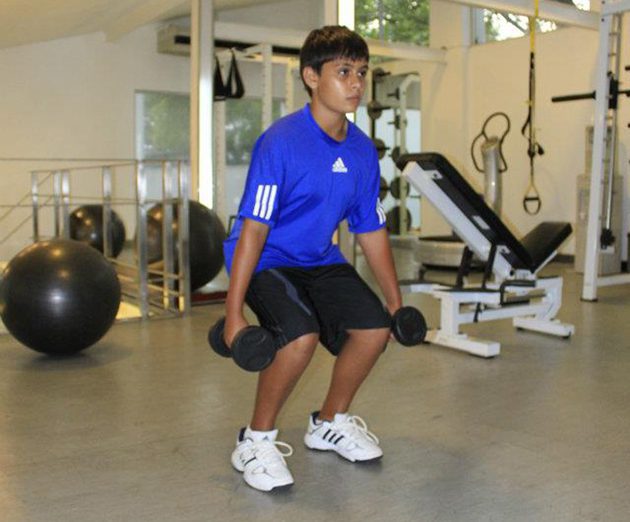
- Strengthen under supervision. Youth resistance training is supported when qualified professionals design and supervise it to suit the child’s needs, goals and abilities, with biological age and maturity taken into account [3].
A note on the WHO numbers: they are health guidelines for all children. A junior in heavy tennis training will usually exceed them. The real question is how that load is built and recovered.
The single-sport SPECIALIZATION
What I see: Players and families specializing early because a coach, an academy or a ranking system pushes them to, and then playing the same sport all year.
What the evidence says. A case-control study of 1,190 athletes aged 7 to 18 compared injured athletes from sports medicine clinics with uninjured athletes from primary care sports physicals. After adjusting for age and weekly hours of sport, specialised training was an independent risk for injury (OR 1.27) and for serious overuse injury (OR 1.36) [2]. Athletes who spent more hours a week in sport than their age in years, or more than twice as many hours in organised sport as in free play, had higher odds of serious overuse injury [2]. The AAP report also lists single-sport participation among the risk factors for overuse injury [1].
What to do:
- Choose two or three sports or activities with your child, and rotate through the year.
- Protect free play. Unstructured time is training for movement, creativity and enjoyment.
- Use the “hours a week should not exceed age in years” idea as a warning light, not a law. It describes an association in one study [2].
- For tennis juniors, build multi-sport weeks and complete rest blocks into the calendar. See my article on the calendar problem for juniors and how to plan rest blocks.
Note : If you are serious on early socialization it is best you invest in individual Medical Doctor, S&C coach, Tennis Coach and a Dietician.
Children are not small adults
What I see: Complex adult training models handed to teenagers, and volumes that suit a professional being copied into a junior’s week. compared to 15-20 years ago its worse sadly due to social media.
What the evidence says. The international consensus statement on youth resistance training says the focus should be on technical competency, with programmes that fit the child’s biological age and maturity and are supervised by qualified professionals [3]. It supports regular participation for health and performance, provided those conditions are met [3].
I also see parents and coaches over-focus on the muscles a sport appears to use most. In tennis that usually means the shoulder, forearm and core. My view, from coaching practice, is that young players need a broad athletic foundation first: running, jumping, throwing, balance and general strength. That is the idea behind long-term athletic development (LTAD). My article on LTAD for tennis players explains it in more detail, and the weight training article covers the strength side.
Elite adult athletes need advanced, specific high-performance methods. Juniors need to earn their way to elite or pro status.
Sleep and days off are training
What the evidence says. In a survey of 112 athletes in grades 7 to 12, those who slept on average less than 8 hours a night were 1.7 times more likely to have been injured than those who slept 8 hours or more, and each extra school grade added to the odds [5]. The sleep guidance I use for teenagers is roughly 8 to 10 hours a night [9]. The study was a retrospective survey, so it shows an association, not proof [5].
What to do: Treat bedtime like a session on the calendar. See my article on sleep for tennis players.
Mistakes I see from coaches and trainers
The evidence tags show which points are backed by research and which are my coaching practice.
- Year-round single-sport commitment. The same structures are loaded again and again with no break [1, 2].
- Treating children like small adults. Too much volume, too little rest, and adult-level pushing [1, 3].
- Applying professional training models to children. Complex programmes designed for adult athletes are a poor fit for growing bodies [3].
- Rushing back after injury. Returning to 100% before the injury has healed and rehabilitation is complete is a common reason injuries come back. This one is my coaching practice.
- Overstating credentials. Youth training should be designed and supervised by qualified professionals [3].
- Not referring on. When needed, send the athlete to an orthopaedic doctor, sports psychologist, dietitian, S&C coach or physiotherapist. This one is my coaching practice.
- Leaving parents without answers. A good programme tells families what the plan is, when the first session happens, and what signs mean the training needs to change. This one is my coaching practice.
Warning signs
There are three levels, and parents and coaches should know all of them.
1. Overtraining and burnout. The AAP describes overtraining as lower performance with a higher risk of injury and illness [1]. Dr Brenner names disturbed sleep, mood changes, low motivation and pain that persists or worsens over a few days as red flags [8]. In my coaching practice I also watch for loss of appetite, constant tiredness or weakness, and a child who keeps finding excuses not to attend practice.
2. Pain and injury. Pain, swelling or loss of function that does not settle needs a doctor’s opinion before more training.
3. Emergency signs after a bump, blow or jolt to the head or body. The CDC Heads Up programme says to remove the athlete from play and get medical attention if there is any suspicion of concussion. Danger signs that need immediate medical attention include one pupil larger than the other, being drowsy or hard to wake, a headache that gets worse, weakness, numbness or decreased coordination, repeated vomiting, slurred speech, convulsions, increasing confusion or agitation, and loss of consciousness, even brief [7]. The athlete should return to play only with permission from a healthcare professional experienced in concussion [7].
Cues for parents to take action
- Talk with your child about their interests, and choose two or three sports or activities together.
- Rotate activities every few months so the same body parts are not overloaded all year.
- Choose a qualified coach your child enjoys working with. Enjoyment keeps them in the sport.
- Book a health and fitness evaluation with a qualified S&C coach. It should cover health and medical history, range of motion, muscle imbalances, cardiovascular fitness and strength, and may include a sport-specific assessment.
- See a dietitian if you need help fuelling training, and a sports medicine doctor or physiotherapist for past injuries or specific goals.
- Watch growth. Growth-related injuries peak during the adolescent growth spurt [6]. Track standing height every 4 to 8 weeks and cut volume if growth speeds up.
- Protect sleep and days off.
The honest limits
The single-sport study was a case-control design with injured athletes recruited from sports medicine clinics, so it shows an association, not cause and effect [2]. In that study, growth rate was not related to injury risk, while a scoping review of elite youth athletes found that growth-related injuries peak during the growth spurt [2, 6], so the evidence on growth is still mixed. The sleep survey was small and retrospective [5]. The AAP guidance covers all youth sport, not tennis alone [1]. The WHO guidelines are for health, not for elite sport loads [4]. Always individualise for the child’s age, sex, growth stage, school load and injury history.
RememBER
Young athletes do not need less ambition. They need better-planned work. Train hard when the body is ready, recover properly, keep variety in the year, and build strength with qualified supervision. That is how we keep young athletes healthy at 14, strong at 18 and still enjoying the game years later.
This article is for general education and is not medical advice. Players with pain, injury or health concerns should consult a qualified doctor or physiotherapist.
Go deeper with TennisBPM
- Coach education: TennisBPM Level 1 (The Performance Foundation) and Level 2 (The Tour-Ready Coach) workshops. See the Coach Education page for current dates.
- Books: Tennis Fitness and Tennis Wellness & Performance. More on the TennisBPM books page.
References
- Brenner JS, Watson A; Council on Sports Medicine and Fitness. Overuse injuries, overtraining, and burnout in young athletes. Pediatrics. 2024;153(2):e2023065129. doi:10.1542/peds.2023-065129
- Jayanthi NA, LaBella CR, Fischer D, Pasulka J, Dugas LR. Sports-specialized intensive training and the risk of injury in young athletes: a clinical case-control study. Am J Sports Med. 2015;43(4):794-801. doi:10.1177/0363546514567298
- Lloyd RS, Faigenbaum AD, Stone MH, et al. Position statement on youth resistance training: the 2014 International Consensus. Br J Sports Med. 2014;48(7):498-505. doi:10.1136/bjsports-2013-092952
- Bull FC, Al-Ansari SS, Biddle S, et al. World Health Organization 2020 guidelines on physical activity and sedentary behaviour. Br J Sports Med. 2020;54(24):1451-1462. doi:10.1136/bjsports-2020-102955
- Milewski MD, Skaggs DL, Bishop GA, et al. Chronic lack of sleep is associated with increased sports injuries in adolescent athletes. J Pediatr Orthop. 2014;34(2):129-133. doi:10.1097/BPO.0000000000000151
- Parry G, Williams S, McKay C, et al. Associations between growth, maturation and injury in youth athletes engaged in elite pathways: a scoping review. Br J Sports Med. 2024;58(17):1001.
- Centers for Disease Control and Prevention. HEADS UP: Parent and athlete concussion information sheet. cdc.gov/concussion
- AAP report by local doctor recommends change in youth sports culture (interview with Dr Joel Brenner). WAVY-TV 10. wavy.com
- Michel M-F, Girard O, Guillard V, Brechbuhl C. Well-being as a performance pillar: a holistic approach for monitoring tennis players. Front Sports Act Living. 2023;5:1259821. doi:10.3389/fspor.2023.1259821