
Nov 23, 2026 · @Ran
TennisBPM | Coach Ran
Common question comes up in every gym session with tennis players and coaches : should we squat on two legs, or train one leg at a time like the game? this goes to upper body training as well.
The honest answer is both. Tennis is played mostly on one leg at a time, but the body still needs the heavy force that two-leg lifts build best. The real question is not which one, but how much of each, for which player, and at what point in the season. This article explains the difference and shows the base to apply both, from juniors to the pro tour and in wheelchair tennis.
What unilateral and bilateral training mean
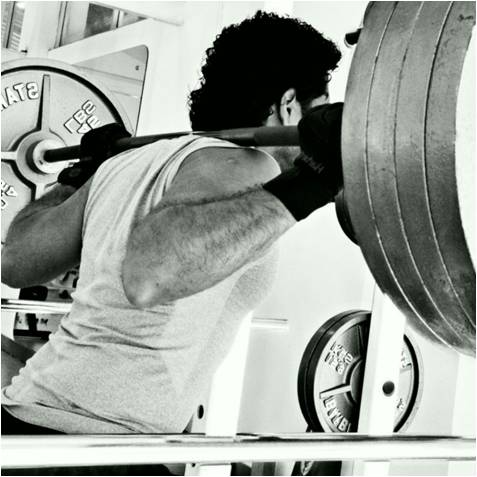
Bilateral exercises use both limbs together at the same time: back squat, front squat, trap-bar deadlift, Romanian deadlift, two-leg jumps, bench press, two-arm medicine ball throws.
Unilateral exercises load one limb at a time, or one limb more than the other: split squat, rear-foot-elevated split squat, lunges, step-ups, single-leg Romanian deadlift, single-leg jumps and hops, single-arm rows and presses, rotational single-arm throws.
Many exercises sit in between them . A split squat has both feet on the ground but loads mainly the front leg. A lateral lunge shifts the load from one leg to the other, as a tennis player does on every wide ball.
What tennis asks: a one-sided game on two legs
What the evidence says. Tennis is a game of short, explosive efforts with frequent changes of direction; Kovacs reports average points under 10 seconds and a need for speed, agility and power [1]. Almost every one of those efforts is a push, a brake or a turn from one leg, and every stroke comes from one dominant arm.
Two ideas from the research explain why that matters for the gym:
- The bilateral deficit. When both limbs push together, each limb often produces less force than it can on its own. A review found this effect is real but inconsistent, can change with training, is influenced by the balance demands of single-limb tasks and by how familiar the task is, and that its link to athletic performance and injury is still not clear [2].
- Inter-limb asymmetry. A systematic review found that strength differences between limbs may be detrimental to jumping, kicking and cycling performance, with mixed findings for change of direction. All the studies were associations, not trials [3].
Tennis-specific data show the same picture:
- In 41 elite youth players, single-leg jump asymmetry was largest around peak height velocity (about 19%) and in the U14 group (about 18%) [4].
- In 558 youth players aged 6 to 13 followed for up to six years, change-of-direction asymmetry became smaller as players got older, and the stronger side was not always the same from one test to the next [5].
- In 56 female players aged about 15, jump asymmetry was related to slower 30-metre sprint and change-of-direction times [6].
- In 34 junior players, small to moderate side-to-side differences in muscle stiffness and tone were found in a few of the muscles used in the strokes [7].
- In the upper body, side differences in shoulder mobility and stability were largest in less experienced players and were not related to serve speed [8].
The key point for coaches and players : tennis creates and lives with some asymmetry. It is not automatically a problem. Large differences, especially during growth, deserve attention.
What the training studies show
What the evidence says. A meta-analysis comparing bilateral and unilateral resistance training found both improved horizontal movement speed such as sprinting, with no difference between them. For both, plyometric or combined strength-and-plyometric training had larger effects than strength training alone. The research note this goes against the popular idea that unilateral work must be better because it looks more specific [9].
A 2026 meta-analysis of nine trials in male basketball players, a sport that also cuts and jumps from one leg, found unilateral training gave better gains in single-leg jump height and a cutting test, while bilateral training was just as effective for two-leg jumping, reactive strength and linear sprints [10]. In academy rugby players, five weeks of rear-foot-elevated split squats or back squats, twice a week, improved strength, 40-metre speed and change of direction equally [11].
In tennis, ten weeks of neuromuscular training twice a week (speed, strength, throws, agility, jumps and coordination) improved bilateral and horizontal jumps, explosive strength and speed in highly trained 13-year-old boys, without increasing asymmetries [12]. In female players, agility and change-of-direction tests showed moderate to strong relationships with single-leg explosive power [13].
| Bilateral training | Unilateral training | |
|---|---|---|
| Best for | Maximal strength, two-leg power, linear acceleration [9, 10, 11] | Single-leg power, cutting and change of direction [10, 13] |
| Load | Heavier absolute loads; easier to progress and measure | Lighter loads per lift; less load on the spine for the same leg stimulus (my coaching practice) |
| Balance and control | Lower balance demand, so more force can be expressed [2] | Higher balance and hip-control demand, closer to tennis positions |
| Asymmetry | Can hide a weaker side | Shows and trains each side separately |
| Learning curve | Squat and hinge patterns need coaching but are stable | Easy to start, harder to load well |
| Limits | Less like the single-leg positions of the game | Load is limited by balance; harder to reach maximal strength |
From the gym to the court: the tennis exercise menu
What I see: Two extremes. Players who only back squat and bench press because “that is real strength”, and players who only do single-leg balance work on wobble boards because “tennis is one leg”. The first group is strong but moves stiffly. The second moves well but has no engine.
What to do: Match the exercise to what the tennis action needs. This table is my coaching practice, built on the evidence above [9, 10, 12, 13]. As I always say all S&C should be personalized and periodized refer the other articles in the blog.
| Tennis action | Key quality | Bilateral choice | Unilateral choice |
|---|---|---|---|
| First step and acceleration | Force into the ground, horizontal power | Trap-bar deadlift, squat jump, two-leg broad jump | Split squat, single-leg broad jump, sled push |
| Open-stance forehand and backhand | Loading the outside leg, hip control | Back or front squat for base strength | Lateral lunge, rear-foot-elevated split squat, lateral bound and stick |
| Wide ball and recovery step | Braking and pushing back from one leg | Romanian deadlift | Single-leg Romanian deadlift, lateral step-up, skater hops |
| Serve | Leg drive, trunk rotation, shoulder control | Squat jump, two-hand overhead medicine ball throw | Split-stance rotational throw, single-arm cable press, band external rotation |
| Split step and volley | Fast landing and reaction | Drop and land, pogo jumps | Single-leg landing and hold, single-leg pogo |
| Upper body for the strokes | Pushing, pulling and decelerating the arm | Push-ups, bench press, two-arm row | Single-arm row, single-arm press, half-kneeling cable chop |
In the upper body, the playing arm already does thousands of one-sided repetitions on court. In my coaching practice, the gym is where we look after the other side and the back of the shoulder: single-arm rows on both sides, rotator cuff work, and pulling as much as pushing.
The serve shows why both matter. In nationally ranked 13-year-old boys, a programme of core strength, elastic resistance and medicine ball work improved serve speed without hurting accuracy [15]. See my articles Does Core Training Really Help Your Serve? and Heavy Weight Training for Tennis?
Progression: how to combine both across the season
The research says both work [9, 11], and each has a task where it shines [10]. In my coaching practice, the question is the balance between them at each point in the season. This follows the S.A.I.D. principle: build general strength first, then make it more specific as competition gets closer. See my article on the S.A.I.D. principle for tennis players.
| Phase | Bilateral | Unilateral | Main aim (my coaching practice) |
|---|---|---|---|
| General preparation | About two-thirds: squats, deadlifts, presses, rows | About one-third: split squats, step-ups, single-leg hinges | Build the engine: maximal strength and movement quality |
| Specific preparation | About half | About half, more lateral and rotational | Turn strength into tennis power: jumps, bounds, throws |
| Competition | Short, heavy, low volume to keep strength | Fast single-leg jumps, landings and throws | Keep what you built without adding fatigue |
| Reset | Light, familiar patterns | Balance, mobility and control | Recover and correct |
Checking asymmetry. Test both sides the same way every 6 to 8 weeks: single-leg countermovement jump, single-leg hop for distance, and a change-of-direction test turning off each leg. The evidence linking asymmetry to performance is mostly associations [3, 6], and the stronger side can change from test to test [5]. In my coaching practice, I look more closely at differences that are large and stay large over several tests, and I give the weaker side the first set and, if needed, one extra set. The again it is done player by player basis not a blanket cover option.
Six best TIPS for unilateral and bilateral training in tennis
- Use both. Both methods improve speed; each has its own strengths [9, 10, 11].
- Build strength on two legs, express it on one. Heavy bilateral lifts for the base, unilateral jumps and bounds for tennis power [10]. This is my coaching practice.
- Add plyometrics. Combined strength and plyometric work gave the largest effects [9].
- Train the lateral plane. Lateral lunges, lateral bounds and skater hops match open-stance strokes and wide balls [13].
- Test both sides, regularly. Single-leg jumps and change-of-direction tests every 6 to 8 weeks [4, 5].
- Look after the non-dominant side. Single-arm and single-leg work on both sides, with extra attention to the back of the playing shoulder [8]. See my article on training load for tennis players.
Four things to avoid
- Only bilateral, only heavy. You build an engine but never teach it to work from one leg [10].
- Only balance-board unilateral work. Too light to build real strength. This one is my coaching practice.
- Chasing perfect symmetry. Some asymmetry is normal in tennis, and the evidence for strict cut-off values is weak [3, 5].
- Copying a pro programme from social media. See my article Why Proper Coaching Beats “Banana Open” Copycat Training.
Unilateral and bilateral training across the ages
This is my coaching practice, built on the evidence above. The 2014 international consensus supports supervised, well-designed resistance training for children and adolescents [14]. Always consider chronological, biological and training age together.
| Player | Main focus | Watch-outs |
|---|---|---|
| U12 | Body-weight squats, lunges, hops, skipping and throwing games on both sides | Learn the patterns, not the load |
| U14 | Goblet squats, split squats, step-ups, light medicine ball throws; equal work both sides | Asymmetry is largest around peak height velocity [4] |
| U16 | Barbell squat and hinge introduced with coaching; loaded unilateral work | Growth spurts; build load slowly |
| U18 and college | Periodised mix as in the phase table | Tournament clusters and travel |
| Pro tour | Heavy bilateral at low volume, fast unilateral power all year | Keep sessions short in long seasons |
| Recreational adult | Twice-weekly strength with both types | Single-leg balance and hip strength for longevity |
See my article on LTAD for tennis players.
Across the week
For coaches and players you can use this as a sample. Adjust it for age, injury history, periodized cycle in a calendar year.
| Week type | Session A | Session B | Session C |
|---|---|---|---|
| Develop week | Bilateral strength: squat, Romanian deadlift, row, press | Unilateral strength and lateral: split squat, lateral lunge, single-arm row | Power: jumps, bounds, throws (both types) |
| Competition week | Short mixed session: 1 bilateral lift, 1 unilateral lift, 1 jump | Optional: fast single-leg jumps and throws, low volume | None |
| Reset week | Mobility and balance on both sides | Light familiar lifts | None |
See my article on the tennis calendar problem for juniors.
Unilateral and bilateral training in wheelchair tennis
In wheelchair tennis, the question moves to the upper body and trunk. Both arms push the chair together, but only one arm swings the racket.
What the evidence says.
- Serve power. In nine of the best nationally ranked Spanish male players, a medicine ball throw that copied the serve was the main predictor of serve speed (r² = 0.847), and the authors recommend medicine ball throws in training [16].
- The shoulder. For wheelchair users the shoulder becomes the main source of mobility. A scoping review names overhead movements, repetitive use of the internal rotators and unbalanced load among the risk factors [17]. Shoulder complaints have been reported in 16% to 76% of wheelchair athletes, though study quality was low [18].
What to do (my coaching practice):
- Use bilateral pulling (two-arm rows, lat pulldowns) to balance the bilateral pushing of the chair [17, 18].
- Use unilateral work for the strokes: single-arm rows, single-arm presses and seated rotational throws to each side [16].
- Train the non-playing arm and both sides of the trunk, because the chair is pushed and turned with both.
- Start with the individual: impairment, trunk control and seating position decide which exercises are possible and safe.
The limits
The comparison studies are not tennis-specific. The movement-speed meta-analysis pooled many sports and programme types [9]; the basketball meta-analysis had nine trials of men only [10]; the rugby study had 18 players over five weeks [11]. The tennis training study had 12 boys [12]. The asymmetry studies are cross-sectional or associations, not trials [3, 4, 6], and the bilateral deficit is inconsistent and still poorly understood [2]. The wheelchair serve study had nine male players from one country [16], and the shoulder reviews were based on low-quality studies [18]. The phase percentages, exercise menu and week tables are my coaching practice, not tested programmes. Always individualise.
As an S&C coach working with tennis and wheelchair tennis
Two legs build the engine. One leg drives the game. A tennis player needs the heavy force that bilateral lifts build best, and the balance, hip control and single-leg power that unilateral work trains. Plan the mix across the season, test both sides, and keep the dominant-side load in mind. In Wheelchair tennis based on the situation of the player we need to modify someday regress and other days progress
Tell. Show. Do. Now it is your turn to do it.
This article is for general education and is not medical advice. Anyone with pain, injury or health concerns should consult a qualified medical doctor .
Go deeper
- TennisBPM: Coach Education Level 1 (The Performance Foundation) and Level 2 (The Tour-Ready Coach), plus player coaching. See the Coach Education page for current dates, and the TennisBPM Tennis Blog for more articles.
- Books: Tennis Fitness and Tennis Wellness & Performance. More on the TennisBPM books page.
References
- Kovacs MS. Tennis physiology: training the competitive athlete. Sports Med. 2007;37(3):189-198. doi:10.2165/00007256-200737030-00001
- Škarabot J, Cronin N, Strojnik V, Avela J. Bilateral deficit in maximal force production. Eur J Appl Physiol. 2016;116(11-12):2057-2084. doi:10.1007/s00421-016-3458-z
- Bishop C, Turner A, Read P. Effects of inter-limb asymmetries on physical and sports performance: a systematic review. J Sports Sci. 2018;36(10):1135-1144. doi:10.1080/02640414.2017.1361894
- Madruga-Parera M, Romero-Rodríguez D, Bishop C, et al. Effects of maturation on lower limb neuromuscular asymmetries in elite youth tennis players. Sports (Basel). 2019;7(5):106. doi:10.3390/sports7050106
- D’Hondt J, Chapelle L. Change of direction asymmetry in youth elite tennis players: a longitudinal study. Int J Sports Med. 2024;45(6):436-442. doi:10.1055/a-2231-9630
- Turkeri C, Öztürk B, Koç M, et al. Relationship between lower extremity strength asymmetry and linear multidimensional running in female tennis players. PeerJ. 2024;12:e18148. doi:10.7717/peerj.18148
- Colomar J, Corbi F, Baiget E. Inter-limb muscle property differences in junior tennis players. J Hum Kinet. 2022;82:5-15. doi:10.2478/hukin-2022-0026
- Lambrich J, Panzer S, Muehlbauer T. Side differences in upper quarter mobility/stability are not related to serve velocity in tennis players with different levels of training experience. BMC Res Notes. 2024;17(1):275. doi:10.1186/s13104-024-06944-z
- Moran J, Ramirez-Campillo R, Liew B, et al. Effects of bilateral and unilateral resistance training on horizontally orientated movement performance: a systematic review and meta-analysis. Sports Med. 2021;51(2):225-242. doi:10.1007/s40279-020-01367-9
- Zhang Z, Shu F, Guo H, Zhang J, Gao J. Unilateral versus bilateral resistance training for explosive jump performance, linear sprint speed, and change-of-direction ability in male basketball players: a systematic review and meta-analysis. Front Physiol. 2026;17:1798477. doi:10.3389/fphys.2026.1798477
- Speirs DE, Bennett MA, Finn CV, Turner AP. Unilateral vs. bilateral squat training for strength, sprints, and agility in academy rugby players. J Strength Cond Res. 2016;30(2):386-392. doi:10.1519/JSC.0000000000001096
- Mainer-Pardos E, Villavicencio Álvarez VE, Moreno-Apellaniz N, Gutiérrez-Logroño A, Calero-Morales S. Effects of a neuromuscular training program on the performance and inter-limb asymmetries in highly trained junior male tennis players. Heliyon. 2024;10(5):e27081. doi:10.1016/j.heliyon.2024.e27081
- Zhou Z, Wang J, Wang H, Ru G, Kong F. A study of female tennis players: Speedcourt training is effective on improving agility and change-of-direction. PeerJ. 2025;13:e19339. doi:10.7717/peerj.19339
- Lloyd RS, Faigenbaum AD, Stone MH, et al. Position statement on youth resistance training: the 2014 International Consensus. Br J Sports Med. 2014;48(7):498-505. doi:10.1136/bjsports-2013-092952
- Fernandez-Fernandez J, Ellenbecker T, Sanz-Rivas D, Ulbricht A, Ferrauti A. Effects of a 6-week junior tennis conditioning program on service velocity. J Sports Sci Med. 2013;12(2):232-239.
- Sánchez-Pay A, Martínez-Gallego R, Crespo M, Sanz-Rivas D. Key physical factors in the serve velocity of male professional wheelchair tennis players. Int J Environ Res Public Health. 2021;18(4):1944. doi:10.3390/ijerph18041944
- Mayrhuber L, Rietveld T, de Vries W, van der Woude LHV, de Groot S, Vegter RJK. A scoping review on shoulder injuries of wheelchair tennis players: potential risk-factors and musculoskeletal adaptations. Front Rehabil Sci. 2022;3:862233. doi:10.3389/fresc.2022.862233
- Heyward OW, Vegter RJK, de Groot S, van der Woude LHV. Shoulder complaints in wheelchair athletes: a systematic review. PLoS ONE. 2017;12(11):e0188410.