

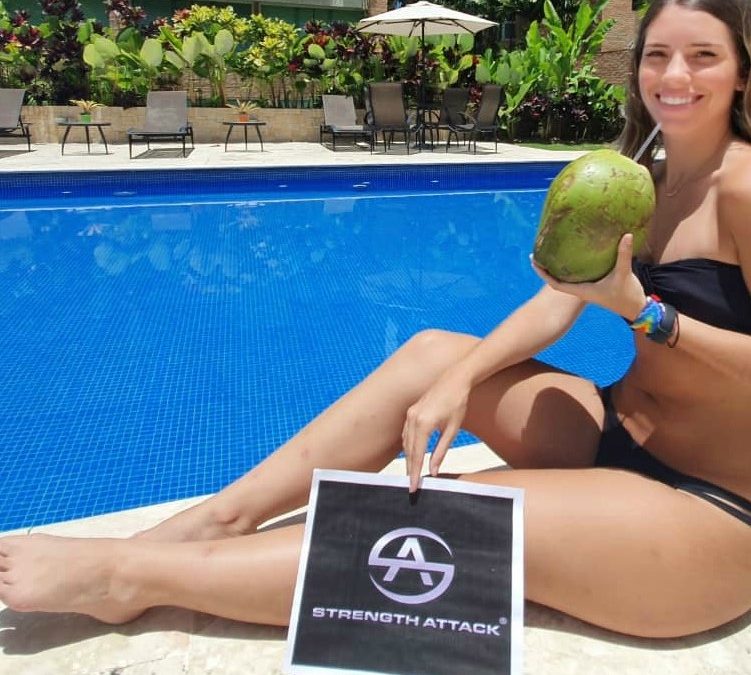
Green vs ORANAGE
In combat sports especially Muaythai & MMA where weight classes , weight cut and due to its full contact nature , hydration is a physiological priority for health , performance and longevity of the athletes career . Fighters push their bodies to the absolute limit, often losing 2-3 liters of sweat per session. This loss depletes critical electrolytes—specifically sodium, potassium, and magnesium—which are essential for nerve signaling and muscle contraction.
While the standard Green Coconut (Cocos nucifera) is a global staple especially Thailand, Philippines, Vietnam, Philippines, South America, the Sri Lankan King Coconut (Cocos nucifera var. aurantiaca), known as Thambili, offers a distinct biochemical profile that may provide a superior “edge” for the elite combat athlete.
The Fighter’s Mineral Requirements
| Key Factor | Green Coconut Water | King Coconut Water (Orange) | Fighter’s Benefit |
| Potassium | High | Higher | Prevents cramping; regulates heart rate. |
| Magnesium | Moderate | Higher | Aids muscle relaxation and ATP production. |
| Sodium | Low | Low | Requires supplemental sea salt for sweat replacement. |
| Natural Sugars | Moderate | Slightly Higher | Rapid glycogen replenishment |
| Digestibility | Good | Excellent | Bioactive enzymes reduce gastrointestinal stress |
Superior Rehydration and Electrolyte Density
Coconut water has been shown to be as effective as commercial sports drinks for whole-body rehydration (Kalman et al., 2012). However, for a fighter in a intense training camps, the King Coconut provides a more concentrated mineral profile. The increased potassium levels are critical for maintaining the resting membrane potential of muscle cells, preventing the involuntary contractions known as “fighter’s cramps” (Ramanathan & Sivakanesan, 2002).
Post-Weigh-In Recovery and Brain Health
The rehydration window after a weight cut is the most dangerous period for an Muaythai or MMA fighter. Dehydration reduces cerebrospinal fluid, potentially increasing the risk of brain injury upon getting punches, kicked , kneed or elbowed or slammed
- King Coconut water’s natural sucrose and glucose provide immediate energy without the insulin spike of processed sugars.
- Because coconut water is naturally low in sodium (approx. 25 mg/100ml, fighters must add a pinch of sea salt to ensure proper fluid retention and prevent hyponatremia (Saat et al., 2002).
Bioavailability
Intense training often leads to “leaky gut” symptoms. King Coconut water contains unique bioactive enzymes (such as acid phosphatase and catalase) that aid digestion and absorption. This allows a fighter to hydrate between rounds or sessions without the bloating associated with synthetic formulas found in commercial sports drink (DebMandal & Mandal, 2011).
Oxidative Stress and Anti-Inflammatory
The repetitive trauma of Muay Thai—checking kicks and taking body shots—induces significant oxidative stress. Coconut water contains cytokinins and antioxidants that scavenge free radicals. The King Coconut variety, specifically, has been noted for a higher antioxidant capacity, which may accelerate the repair of damaged muscle tissue (Lima et al., 2015).
The Fighter’s CocoNUT Protocol
- Pre-Training: 250–350 ml of King Coconut water 60 minutes prior to ensure electrolyte saturation.
- Intra-Training: 50/50 mix of coconut water and filtered water with a pinch of Himalayan salt for sessions exceeding 90 minutes.
- Post-Training: 500 ml immediately. This is the ideal time to pair it with your extra protein to facilitate nutrient transport into the muscle cells via the natural sugar delivery system.
- Before Bed: 150 ml of King Coconut water. The magnesium content supports the parasympathetic nervous system, enhancing deep sleep—the ultimate recovery tool.
If you like to know details on coconut and wellness and its evolution check
WELLNESS EVEXIA : https://www.amazon.com/WELLNESS-EVEXIA-365-CCCLXV-Perspective/dp/B0CDZ21SNN/
Combat Sports Equipment & Supplements https://www.amazon.com/shop/ranilharshana?ccs_id=db6a58c1-cec9-4dca-97e8-726bffc91147
ReferencE
- DebMandal, M., & Mandal, S. (2011). Coconut (Cocos nucifera L.: Arecaceae): In health promotion and disease prevention. Asian Pacific Journal of Tropical Medicine, 4(3), 241-247.
- Kalman, D. S., Feldman, S., Krieger, D. R., & Bloomer, R. J. (2012). Comparison of coconut water and a carbohydrate-electrolyte sport drink on measures of hydration and physical performance in exercise-trained men. Journal of the International Society of Sports Nutrition, 9(1), 1.
- Lima, E. B., Sousa, C. N., Meneses, L. N., Ximenes, N. C., Santos Júnior, M. A., Vasconcelos, G. S., … & Vasconcelos, S. M. (2015). Cocos nucifera (L.) (Arecaceae): A phytochemical and pharmacological review. Brazilian Journal of Medical and Biological Research, 48, 953-964.
- Ramanathan, G., & Sivakanesan, R. (2002). Mineral composition of different varieties of coconut (Cocos nucifera) water. Journal of the National Science Foundation of Sri Lanka, 30(1-2).
- Saat, M., Singh, R., Sirisinghe, R. G., & Nawawi, M. (2002). Rehydration after exercise with fresh young coconut water, carbohydrate-electrolyte beverage and plain water. Journal of Physiological Anthropology and Applied Human Science, 21(2), 93-104.
- Shirreffs, S. M., & Sawka, M. N. (2011). Fluid and electrolyte needs for training, competition, and recovery. Journal of Sports Sciences, 29(sup1), S39-S46.