

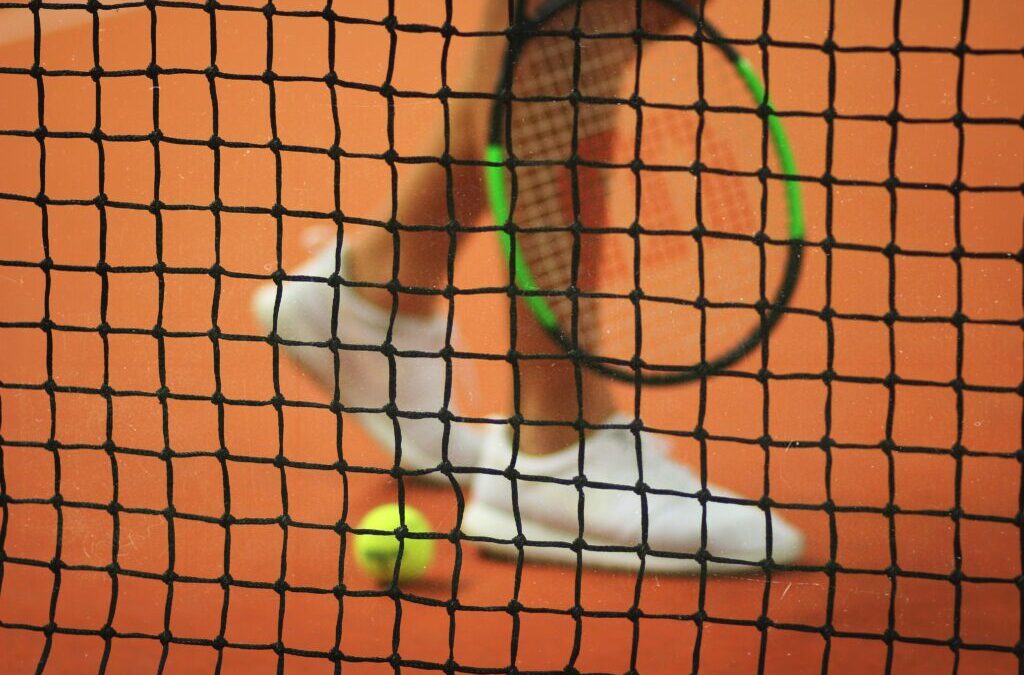
You step up to the line to serve for the game/set or the match. Your heart pumps like a racing car against your ribs. Your grip feels like iron, your breathing heavy, your body tense. The cheer of the crowd at a Grand Slam or BJKF, Davis Cup, SEA/Asian or Olympics, or extreme silence of junior finals on ITF tours —clouds your thoughts. You double-fault.
We have all seen and experienced this. As coaches and players who have spent years on courts around the world, we have witnessed this scene playing out countless times. In competitive tennis, the battle is often framed as player versus player, but the most important battle is the one fought between your ears. It is “You versus You”
Modern sports science and psychology, combined with decades of on-court experience, now provide evidence-based strategies to manage court-side stress. As an old school performance coach, we have utilized these methods on individual and case by case basis. As per these days new generation coaches will ask for scientific evidence, hence this article revolves around best of both worlds. Before Research sports evolved. As coach or player, always be open minded to learn and apply science, practical and technology as a unison.
Psychological Demand of Tennis
Before finding a solution to the problem, we must understand it. Tennis is not just physically exhausting; it is cognitively and emotionally draining in ways few sports can match.
A recent review published in Sports (2025) highlights that competitive tennis presents “significant psychological demands, including elevated stress levels and susceptibility to maladaptive coping behaviors” [1]. The solitude of the sport means players must maintain concentration and emotional control amidst immense pressure, with no teammates to hide behind, no time limits, and endless moments of solitude to overthink every mistake it does not stop with one tournament it carries to yearlong competition.
The physical and mental pressure is cumulative. Research analyzing over 650,000 points from Grand Slam tournaments revealed a stark reality: prior unforced errors significantly increase the likelihood of subsequent errors [1]. This “snowball effect” demonstrates how quickly mental stress can degrade physical performance—and why breaking this chain is the difference between a title and a Qualifying or first-round exit.
For the touring professional or high-level junior, these psychological demands are magnified. Long before research confirmed it, any experienced tennis coach or performance coach has witnessed this repeatedly: the player who tightens up at 5-4, the junior who loses a five-point lead, the serve that abandons its owner at the worst possible moment.
“Resilience Racket Model”
To help players visualize mental strength, the 2025 scoping review introduced the Resilience Racket Model [1]. This innovative framework uses the metaphor of a tennis racket to explain how to build a solid psychological game.
The Handle (Physical Foundation)
Your fitness, footwork, technique, and recovery habits—including proper nutrition and sleep. Without a strong handle, the racket flies out of your hand under pressure. You cannot have mental strength if you are physically unprepared. This is why all players should focus on Long Term Athletic Development and Periodizing.
The Strings (Psychological)
Your coping toolbox—focus, emotional regulation, confidence, and the ability to absorb the “shock” of a lost break point or a bad line call. These strings determine how well you manage tension and stress.
The Frame (Systemic )
Your coaches, family, training environment, and support network. A cracked frame (a toxic environment or unstable support system) causes even the best strings to lose tension and break. As we all know Tennis is one of the hardest sports on the planet from Juniors to Pro and its grind of Years with correct support as it requires, Social economic factors including intrinsic and extrinsic.
The Sweet Spot (Integration)
The goal: when physical readiness, mental resilience, and systemic support meet, you hit the ball with maximum effect and minimal effort. This is where flow state lives.
The model emphasizes that mental health and psychological skills deserve parity with physical training [1]. You cannot strengthen the “strings” of your racket without deliberate, consistent practice.
Especially for Tennis players, this model is easy to understand and applicable to all players at their level, I highly recommend.
How to Strengthen Your Mental Strings
So how do we train our mind? Science and on-court experience point to three highly effective methods. As this blog article is only focused on practical mental tips as we shall discuss further components in the future articles and refer our past articles for related articles.
1. Reframe Your Thinking
How you talk to yourself matters. Often, stress comes from “irrational beliefs “thoughts like “I must not miss this shot,” “I am a failure if I lose this match,”, “what will my coaches/parents/supporters feel I lose” or “I always choke in big moments.”
A 2024 study on competitive female tennis players applied a Cognitive Rational Restructuring Program based on Rational Emotive Behavior Therapy (REBT) [2]. The results were significant:
- Average sports psychological skills increased.
- Performance strategy improved
- Sports competition anxiety decreased.
The study concluded that irrational beliefs shifted to rational cognition, resulting in “heightened focus and confidence in the game” [2]. Similarly, research on junior athletes using Cognitive Behavioral Therapy (CBT) found that the goal is not to eliminate anxiety entirely, but to make the “interpretation of competition anxiety… more flexible” [7].
How to apply on above on court
When you feel tension rising, identify the thought causing it. Replace negative, outcome-oriented instructions with positive, process-oriented ones:
- Instead of “Don’t double-fault,” try “Toss high, smooth acceleration through the ball.”
- Instead of “Don’t choke this lead,” try “One point at a time. Focus on my targets.”
- Instead of “What will my coaches /parents /supporters think,” try “Its Tennis I will give my 100% effort win or lose and make my opponents work hard for the point.”
2. Breathe to Regulate Your Nervous System (The 20-Second Reset)
When stress hits, your sympathetic nervous system (fight or flight) takes over. Heart rate spikes, breathing becomes shallow, fine motor control deteriorates—and your drop shots and volleys lose their “touch.”
Breathing is your manual override. It is the remote control to turn off the stress response and engage the parasympathetic system (rest and digest).
A 2025 article in the ITF Coaching & Sport Science Review emphasizes that breathing techniques are essential practical tools for optimizing well-being and performance [4]. Research highlights that slow-paced breathing can:
- Decrease heart rate and respiratory rate.
- Increase relaxation and decrease anxiety.
- Improve concentration and focus [4]
How to apply this Drill: Box Breathing
Practice Box Breathing during the 16-20 seconds between points:
- Inhale for 4 counts
- Hold for 4 counts.
- Exhale for 4 counts
- Hold for 4 counts.
These simple ritual flushes cortisol from your system, lowers heart rate, and brings your focus back to the present moment. Elite players use these 20 seconds wisely—not to think about the last point or the next game, but to reset their nervous system completely.
Note : Box Breathing Technique, even though the research is 2025 for tennis , I know including myself many others coaches used this technique over 30 years , and how this breathing technique came into main stream is initially through martial arts, meditation, yoga and it was incorporated and well received to elite military and other occupation in high stress including Fire fighters, Combat sports etc. As this is the easiest method out of many breathing techniques. In a future article we shall explore more.
3. Stay Present with Mindfulness
Winning the point that just ended is impossible. Losing the point before it starts is a choice. Mindfulness, the ability to focus on the present moment without judgment—is a gamechanger in tennis.
A 2025 study evaluated a 6-week mindfulness program on regional-level tennis players [6]. The findings were interesting:
- The mindfulness group increased their feelings of self-efficacy.
- They improved their technical performance in ball-throwing drills.
- They reduced the number of negative gestures and speeches during matches (racquet throwing, shouting, visible frustration) [6]
By focusing on bodily awareness and the present moment, players stopped the cycle of self-criticism that leads to the “cascade of errors” identified in Grand Slam data [1].
Application for Coaches
Incorporate mindfulness into practice sessions. Have players spend two minutes between drills focusing entirely on their breath, or practice “non-judgmental awareness” during feeding drills—noticing errors without emotional reaction, then adjusting.
Practical Takeaways for Players and Coaches
Adapting to mental stress does not happen by accident. It happens in practice sessions forming habits and rituals with right physical and psychological training. Here is how to integrate these findings into your game and coaching:
1. Build a 16-Second Ritual
Use the time between points with intentions. One cycle of box breathing plus a physical reset (adjusting strings, bouncing the ball a set number of times) signals to your brain: “We are resetting to reload the. Next point.”
2. Use Mistakes as Data
When you make an error, view it as a technical data point rather than a character flaw. “My weight was back on that shot” is useful. “I’m such a choker/I made stupid mistake “ is destructive. Acknowledge, learn, and visualize the next point successfully—a technique known as “visualization of success.”
3. Train Your Brain Like Your Body
Just as you do drills for your forehand, or your S&C do drills for your mind. Spend 5-10 minutes daily practicing mindfulness, cognitive restructuring, or breathing exercises. When the pressure is on in a deciding tiebreak, your “mental muscles” will be ready to fire. Remember you become what you practice correctly.
4. Get used to the Discomfort
Sports psychologist Roberto Forzoni, who worked extensively with Andy Murray, suggests players must “be comfortable being uncomfortable” [3]. Mentally tough players see challenges as the path to growth, not as threats. They welcome the decision set. They become better in chaos.
Note: Again, these principles have been in use in Martial arts circles and military circles forever.
5. Create the Frame
Remember the Resilience Racket Model’s “Frame.” Your role as coach extends beyond technique. Creating a supportive environment where players can express fears, discuss pressure, and practice mental skills without judgment is essential. A cracked frame breaks under tension; a solid frame holds everything together.
The mental game of tennis is complex but mastering it is possible it is not going to happen overnight; consistency combined with coaching and socioeconomic factors is the foundation. By understanding the psychological demands of the sport through models like the Resilience Racket Model, and by applying evidence-based tools like cognitive restructuring, breathing techniques, and mindfulness, players can build a game that holds up under fire.
The next time you step onto the court—whether you are a touring pro, a high-level junior, or a dedicated club player—remember: the racket in your hand is only half the equipment. Brain guiding is the most powerful tool you own. Train it well with Physical, Nutrition, recovery, and tactical training
In-between calm and pressure, preparation makes all the difference
For coaches and players who are on tour must read practical tips and related books
Tennis Wellness & Performance https://www.amazon.com/dp/B0DPL48X51
Tennis Fitness https://www.amazon.com/tennis-fitness/dp/1492867969
Mind Set https://www.amazon.com/WHEN-LIFE-SHOCKS-YOU-WHAT/dp/B0D3RBPWFC/
Wellness https://www.amazon.com/WELLNESS-EVEXIA-365-CCCLXV-Perspective/dp/B0CDZ21SNN/
Tennis Equipment https://www.amazon.com/shop/ranilharshana/list/1A104W2N5FIHY?ref_=aip_sf_list_spv_ofs_mixed_d
Tennis Books https://www.amazon.com/shop/ranilharshana/list/KPDXGXUSWV2L?ref_=aip_sf_list_spv_ofs_mixed_d
References
- Chirico, A., et al. (2025). The mental game of tennis: A scoping review and the introduction of the Resilience Racket Model. Sports, 13(5), 130.
- KCI. (2024). The development and application of cognitive rational restructuring program for female tennis players. Korean Citation Index (KCI).
- USTA Southern California. (2024). Six things you can do to be more mentally tough. United States Tennis Association.
- Van de Braam, M. (2025). Mental skills and tools for coaches: How and why to implement breathing techniques into your coaching. ITF Coaching & Sport Science Review, 33(95), 12–14.
- BMC Psychology. (2025). Type and description of exercises included in Perform-UP tennis app. BMC Psychology.
- Robin, N., et al. (2025). The beneficial effects of a mindfulness programme on self-efficacy, emotion management and tennis performance. ITF Coaching and Sport Science Review, 32(94), 26–33.
- J-STAGE. (2023). A preliminary study of a cognitive behavioral therapy program for competitive anxiety in junior athletes. Japanese Journal of Sport Psychology, 50(2), 51–61.